Customer Data Collection Guide 2026
First-party data is your competitive advantage. Learn how to collect, organize, and activate customer data ethically and effectively.

Key Takeaways
- 1First-party data is now essential — third-party data is declining in reliability
- 2Four data types: identity, behavioral, experience, and operational
- 3Companies leveraging behavioral insights outperform peers by 85% in sales growth
- 4Collect only actionable data — avoid hoarding for its own sake
Key Takeaways
- First-party data is now essential — third-party data is declining in reliability
- Four data types: identity, behavioral, experience, and operational
- Companies leveraging behavioral insights outperform peers by 85% in sales growth
- Collect only actionable data — avoid hoarding for its own sake
- Build compliance into your process from day one
Why Data Collection Matters More Than Ever
Let me be blunt: if you're still relying primarily on third-party data for ad targeting and personalization, you're building on a crumbling foundation.
The brands winning in 2026 have robust first-party data strategies. Here's how to build yours.
Understanding Data Types
Not all customer data is equal. Understanding the four types helps you prioritize collection:
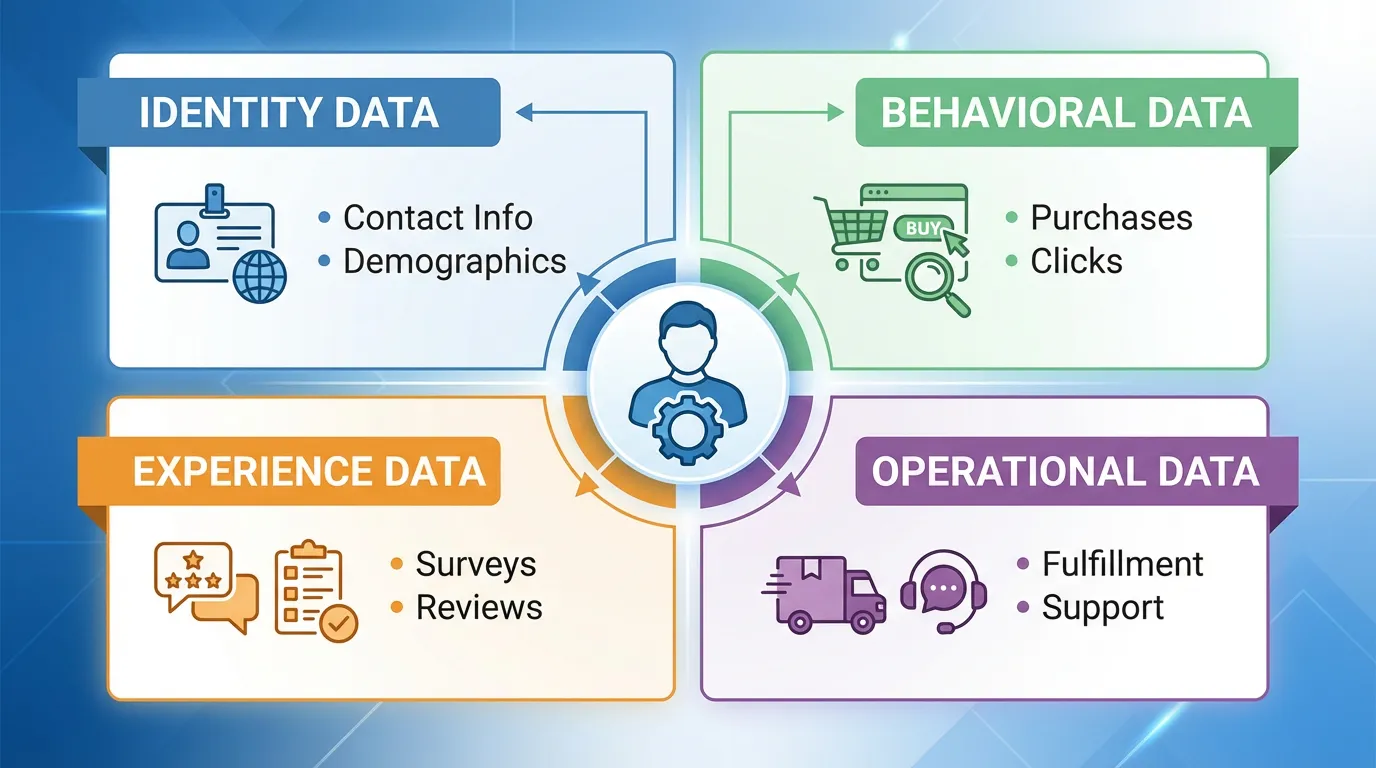
1. Identity Data
Who is your customer?
- Names and contact information
- Demographics (age, gender, location)
- Account IDs and login information
- Device identifiers
2. Behavioral Data
What do they do?
- Products viewed and purchased
- Email opens and clicks
- App usage patterns
- Search queries
- Cart abandonment patterns
3. Experience Data
How do they feel?
- Survey responses
- NPS scores
- Product reviews
- Support interactions
- Social media sentiment
4. Operational Data
What happens behind the scenes?
- Order fulfillment times
- Support ticket resolution
- Inventory availability
- Delivery status
Collection Methods: First-Party vs. Zero-Party
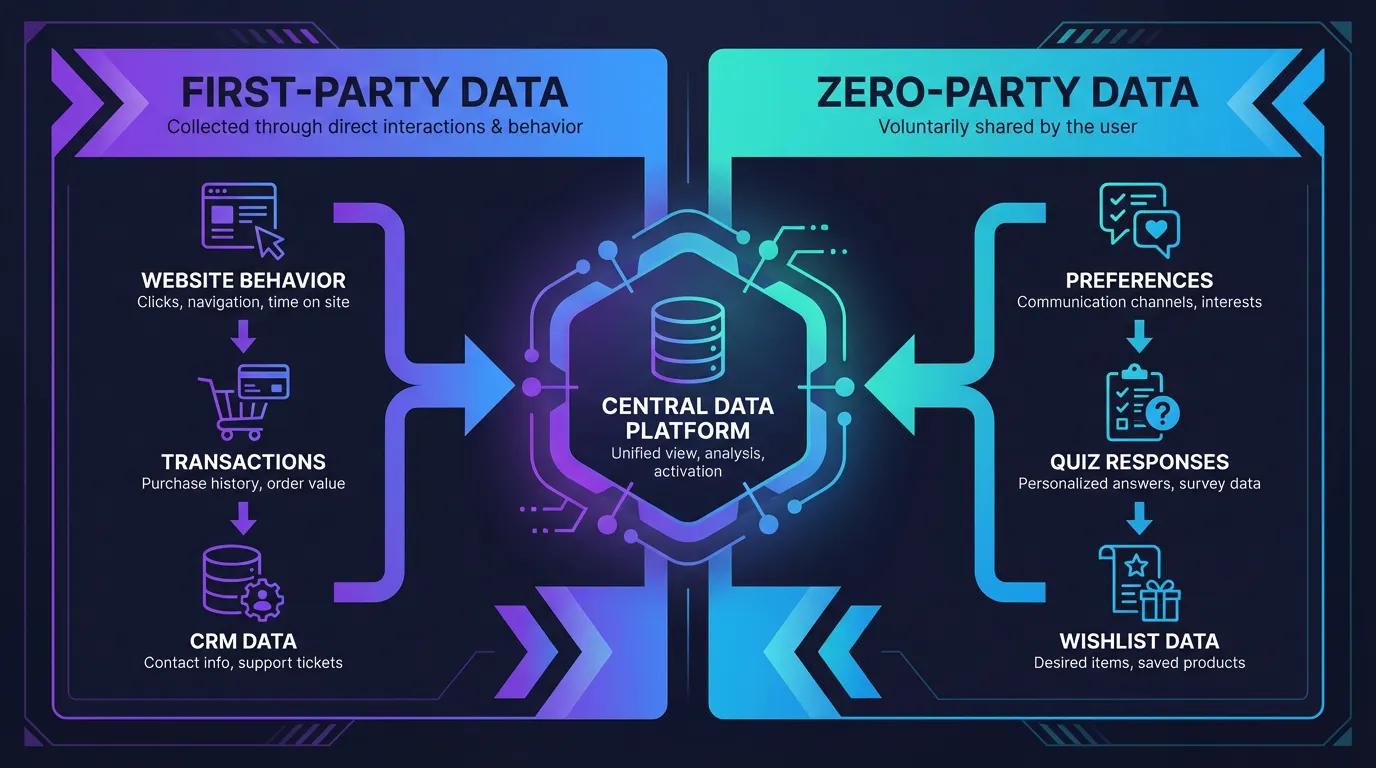
First-Party Data
Data you collect through direct interactions:
- Website behavior (via analytics and pixels)
- Transaction history
- CRM records
- Email engagement
- App activity
Zero-Party Data
Data customers voluntarily share:
- Preference center selections
- Quiz or survey responses
- Wishlist items
- Communication preferences
- Review content
Customers willingly share this information, often for a better, personalized experience
Zero-party data is powerful because it's explicit. No inference needed — customers told you directly.
Third-Party Data (Declining)
Data purchased from external sources:
- Diminishing accuracy due to privacy changes
- Increasingly restricted by regulations
- Less cost-effective than first-party alternatives
Building Your Data Collection Strategy
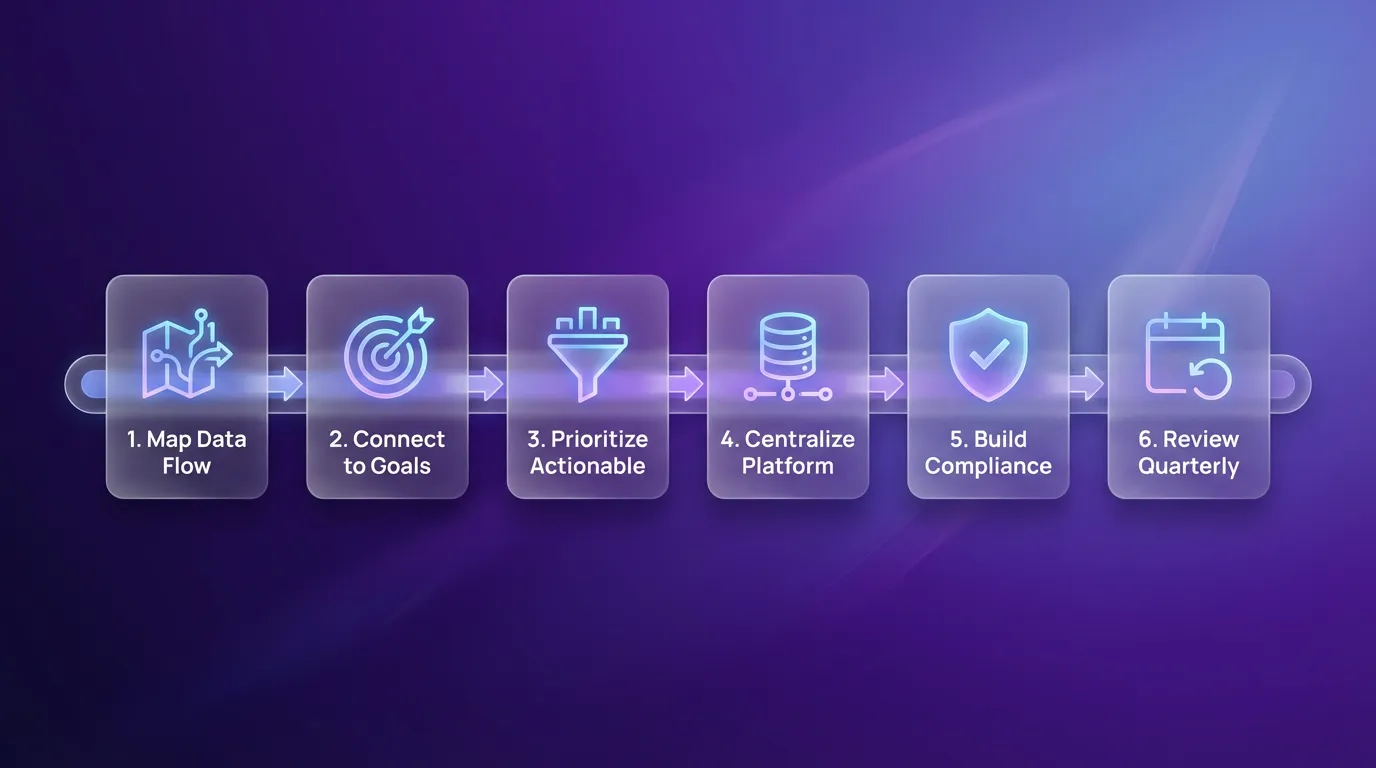
Step 1: Map Your Current Data Flow
Before collecting more, understand what you already have:
- What data sources exist?
- Where does data live? (CRM, analytics, CDP, spreadsheets?)
- How does data flow between systems?
- What gaps exist?
Step 2: Connect Data to Business Goals
Every data point should serve a purpose:
| Data Point | Business Use |
|---|---|
| Email address | Remarketing, lifecycle campaigns |
| Purchase history | Segmentation, recommendations |
| Browse behavior | Personalization, retargeting |
| Survey responses | Product development, satisfaction tracking |
Step 3: Prioritize Actionable Data
Focus on data that drives decisions:
High value: Purchase intent signals, product preferences, engagement patterns Lower value: Random demographic data without behavioral contextStep 4: Centralize in One Platform
Scattered data is useless data. Options for centralization:
- CDP (Customer Data Platform): Full-featured, expensive, complex
- CRM with integrations: Good for smaller operations
- Data warehouse: Technical, flexible, requires engineering
Step 5: Build Compliance In
Privacy isn't optional:
- Data access: Users can request their data
- Deletion rights: Users can request removal
- Storage limitations: Don't keep data indefinitely
- Purpose limitation: Only use data as described
Step 6: Review Quarterly
Data strategy isn't set-and-forget:
- Are you collecting data you're not using? Stop.
- Are there gaps preventing important analysis? Fill them.
- Have business needs changed? Adjust collection.
Practical Collection Tactics
Website Data Collection
Must-have:- Analytics (GA4 or alternative)
- Conversion tracking pixels
- Event tracking for key actions
- Heatmaps and session recordings
- A/B testing data
- Search query data
Email/Marketing Data
Capture:- Opens, clicks, conversions
- Preference center selections
- Unsubscribe reasons
- Forward/share activity
Survey/Feedback Data
Best practices:- Keep surveys short (5 questions max for most contexts)
- Ask at moments of engagement
- Offer value in exchange (discount, entry, early access)
- Close the loop — show customers you're listening
Offline Data
Don't forget non-digital touchpoints:
- Point-of-sale transactions
- In-store interactions
- Event attendance
- Call center conversations
- Direct mail responses
Activating Your Data
Collected data means nothing until you activate it:
For Advertising
- Build custom audiences from website visitors
- Create lookalikes from best customers
- Suppress existing customers from acquisition campaigns
- Personalize creative based on behavior segments
For Personalization
- Recommend products based on browse/purchase history
- Customize email content by preference
- Adapt website experience by segment
- Trigger campaigns based on behavior
For Product Development
- Identify feature requests from support data
- Understand usage patterns from behavioral data
- Prioritize based on customer segment value
The Business Impact
This isn't theoretical. Data-driven companies measurably outperform competitors.
The Bottom Line
First-party data collection isn't a project — it's a capability you build over time.
The brands winning in 2026 treat their customer data as a strategic asset, not an afterthought.
Ready to activate your first-party data for better ad targeting? AdBid integrates with your data sources to power smarter campaign optimization. Try AdBid free for 14 days.
Ready to optimize your ad campaigns?
Try AdBid free for 14 days. No credit card required. See how AI-powered optimization can transform your advertising.
Related Articles
Cookieless Future: Prepare Your Ad Strategy
Server-Side Tracking Guide 2026
First-Party Data for Ads: Your Competitive Advantage in 2026
Advertising Privacy Compliance Guide 2026
Audience Segmentation Guide 2026
Retail Media Networks Guide 2026
More in Guides
View all →
The Complete Guide to AI-Powered Ad Optimization in 2025
Understanding Meta Advantage+ Sales Campaigns: 2025 Guide

Meta Advertising Policies in 2025: What You Need to Know
How to Scale Mobile App Advertising in 2025
The Ultimate Guide to Google Ads Automation Tools